Spoiled? Spolia or museums

One of the joys of discovering a new city or town in the Eastern Mediterranean is spotting the spolia, or reused material, of past empires and epochs in the walls of houses, streets,
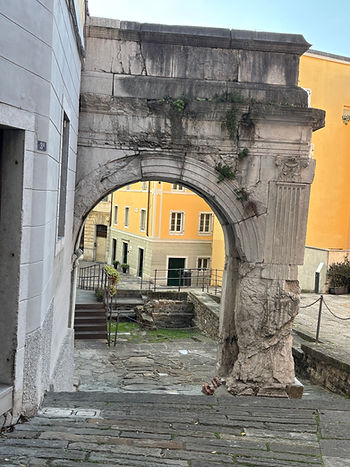
churches, mosques, castles, gravestones . . .. Especially when there are a combination of different civilizations reusing this material. Earlier this year, I had seen spolia all around Trieste, an exquisite example gave a hotel its name – hotel d’Arco (see left) – and the Cathedral – San Giusto Martiere - was made from the litter of Roman stones.
Exploring the old town in Ankara, with my friend and fellow Newton scholar Ipek, was delightful, not least due to its spolia. The Aslanhane Mosque (below) – I only picked up that it meant lion house due to Aslan in The Lion, the Witch and the Wardrobe – had a notice outside explaining about its spolia.

It was closed but I peaked through the window to see the wooden columns that acted as

trunks sprouting to treetops of Roman Corinthian capitals.
This type of mosque is known as a forest mosque and was from the Selcuk period, dating to the 13thC (see right).
The minaret outside was comprised of distinctive reused stones with a bench of a marble slap, Corinthian capital and base of a doric column, conveniently placed for weary walkers and pilgrims (see below).

The castle walls are said to date back 3,000 years to the Hittites but the ‘modern’ castle is Byzantine from 859 CE and ordered to be built by one of my favourite monarch names ever – Michael III or ‘Michael the Sot’. This updated previous Roman defences, which had

updated Galatian ones, and was in turn updated by the Ottomans, now housing recently restored (or rather refurbished) Ottoman houses. The walls, like those of the fortress in Thessaloniki, had spolia embedded aesthetically at strategic points. Walking up to the Ak Kale (White Fortress) gave amazing panoramic views over the city (see below) and was well worth the steep walk.
The Guney Kapi (South Gate) is connected by Roman Masonry, including altar tables and inscriptions.

What made all of this particularly enjoyable was reflecting on it over the next two days at the conference Fragments of Empire. There we heard about how the material culture of the past

was used by Europeans and peoples in the Ottoman Empire over the last two centuries and the power imbalances therein. A thoughtful, but provocative, keynote by Edhem Eldem questioned the validity of antiquarianism (both that of the 2-3 centuries of European focus and the ‘we have it to’ focus within eastern med nations) and described a fetish around objects, whatever museum they are in. The use of ‘tenting’ by nomadic people (and Europeans) described by Sean Silvia, the different depictions of ‘huts’ by Scharf and Muller in Lycia outlined by Sebastian Marshall, the dislocated photographs of the 1863-74 digs at Ephesos uncovered by Alexandra Solovyev and the first reconstruction of a full monument in a museum – argued for by Charles Fellows in the 1840s – discussed by Batuhan Ozdemir all made me reflect on museum ‘collections’.
All ways of collecting are all imbued with ideological, cultural and emotional importance. Putting an inscription in a wall, a capital in a mosque, attaching an arch to your house are all forms of cultural appropriation, as much as researching and putting an object in a display case. As I spend more time looking at depictions in books and taking the opportunity – whenever I can – of visiting those places in reality or mooching round palimpsest streets, I find that texts and walls give me more of a sense of creative freedom and air to breathe than display cases. Much though I enjoy visiting museums of ancient objects, I find that display cases, more and more, make me feel uneasy, even queasy, but I’m not yet sure entirely why.
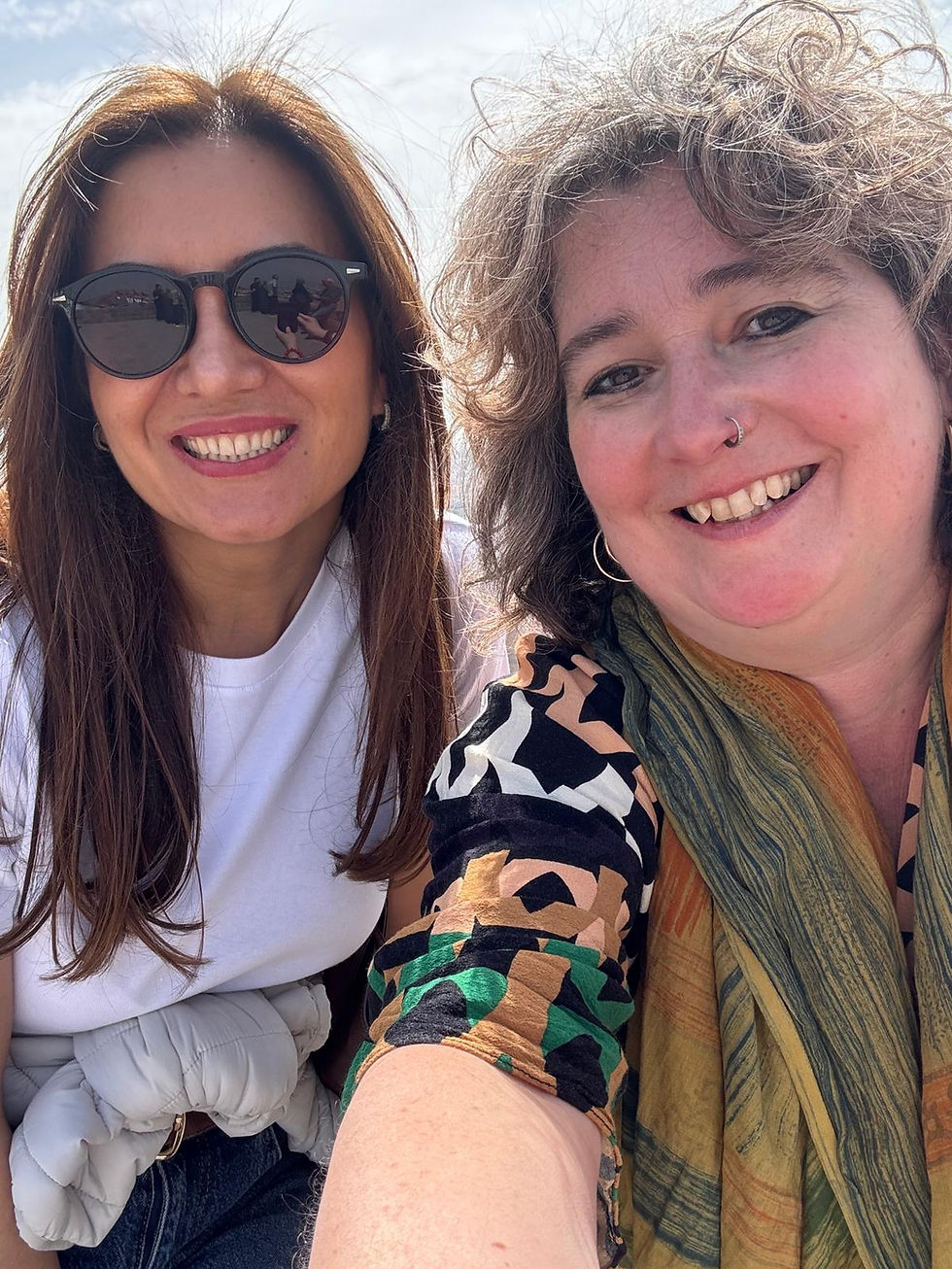
With thanks to Ipek Demir for walking 10km with me and all the organisers, speakers and attendees of Fragments of Empire. Collecting the Making of Archaeology, 16-17 April 2026 at Bilkent University with the British Institute of Ankara.


